Senior engineers · since 2023
Custom software & SaaS
We choose the right stack for the problem, then ship it to production. SaaS, internal tools, and marketplaces taken from architecture to deployment with one engineering partner, React and Next.js on the front, Node and Python on the back, secure patterns by default, real payments integrations shipped and running.
01 — What we build
Built for production, end to end.
Production SaaS builds
We take SaaS, internal tools and marketplaces from architecture to deployment with one engineering partner. Real users and real load are the brief, not a demo that collapses the moment it ships.
Payments and payouts
Stripe handles subscriptions and one-off charges, Wise handles marketplace payouts, PayPal goes in where the audience expects it. The work behind the SDK call is webhook reconciliation, idempotency keys, replay safety and dispute handling so finance has a deterministic source of truth.
Security by default
Security patterns are wired in from the first commit, not bolted on at the end. AES-256 at rest for sensitive fields, signed webhooks, prepared queries through Prisma and role checks at the middleware layer so a privileged surface fails closed.
APIs and real-time
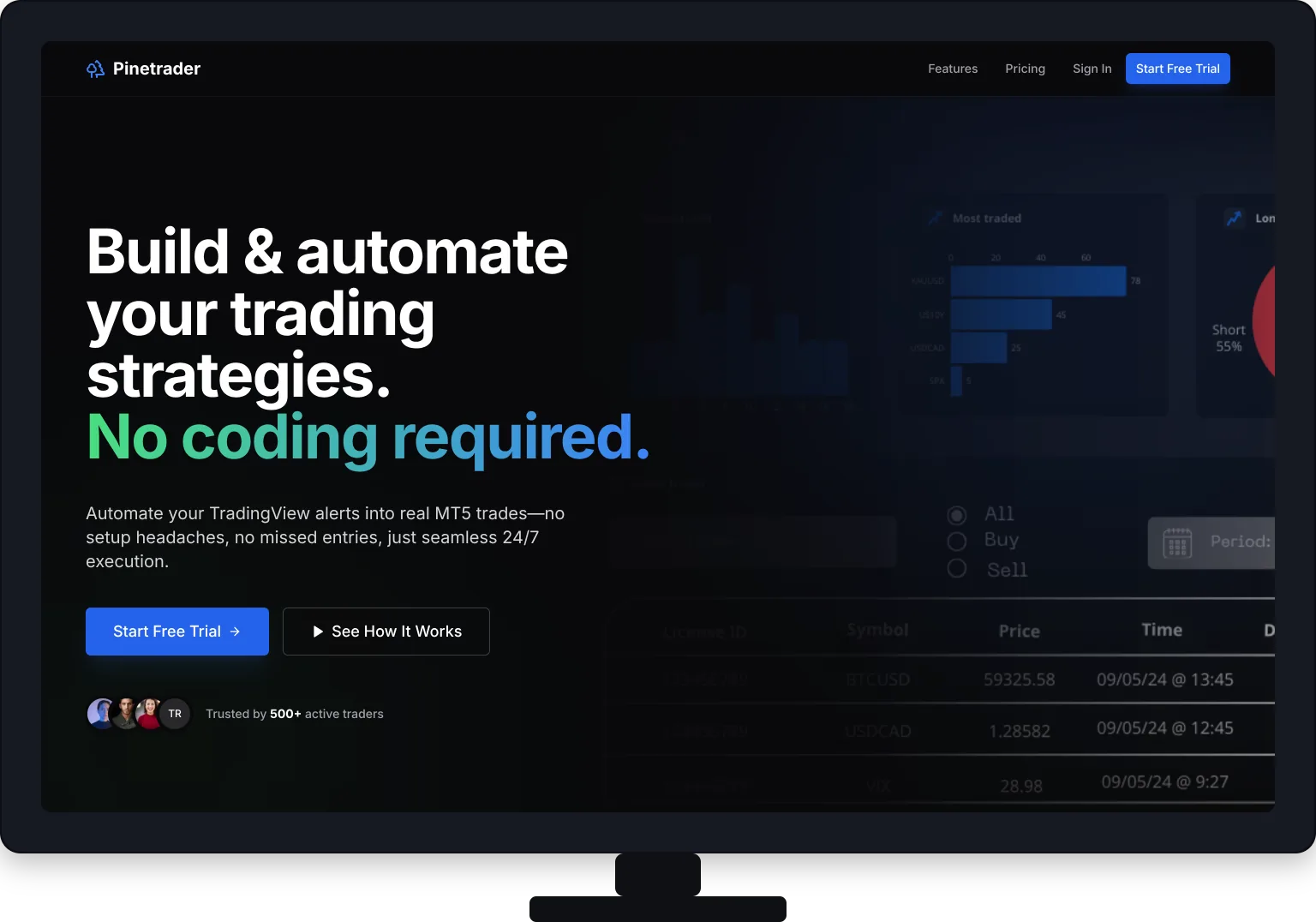
We build REST and GraphQL APIs as first-class surfaces, versioned and documented. When a feature genuinely needs sub-second updates we reach for WebSockets and a broker like MQTT rather than polling, the way PineTrader moves a signal to MetaTrader 5 and back to the browser.
AI in real product flows
When AI belongs in the product it ships as a feature, not a banner: LLM calls wired into a real flow with cost and prompts documented, retrieval grounded in the customer's own data, and guardrails at the boundary. Scoping names which part actually needs a model and which is better as deterministic code.
Rescue and recovery
About a third of our SaaS work starts as rescue, inherited codebases and half-finished MVPs on stacks the original team has moved on from. The first pass is an audit and a recovery plan with the trade-offs spelled out, the second is the work itself.
Custom software at the studio means shipping production systems with real users, not prototypes that demo well and then collapse under real load. Most work starts on Next.js or React on the front, Node or Python on the back, with PostgreSQL or MySQL as the source of truth and Prisma where the schema churns enough that a typed query layer earns its weight.
Payments and payouts, properly wired
Stripe handles subscriptions and one-off charges. Wise handles marketplace payouts in the patterns where Stripe's payout coverage doesn't fit the brief. PayPal goes in when the audience expects it; we don't push it as a default. The integration work behind any of these is more than the SDK call, it's webhook reconciliation, idempotency keys, replay safety, dispute handling and a deterministic source of truth for finance to reconcile against.
Security by default
Security patterns are wired in from the first commit, not bolted on at the end. AES-256 at rest for sensitive fields where it belongs (bank details, identifiers). Signed webhooks. Prepared queries through Prisma so SQL injection isn't a class of bug. Role checks at the middleware layer so a privileged surface fails closed by default rather than relying on a missing guard somewhere downstream.
APIs and real-time
Most products are only as good as the systems they talk to. We build REST and GraphQL APIs as first-class surfaces, versioned and documented, and reach for real-time infrastructure (WebSockets, and a message broker like MQTT) when a feature genuinely needs sub-second updates rather than polling. PineTrader is a case in point: a TradingView signal travels over an MQTT backbone to MetaTrader 5 and back to the browser over WebSockets with sub-second latency, because a trade that fires thirty seconds late is worthless.
AI features in real product flows
When AI belongs in the product, it goes in as a feature, not a banner. That means LLM calls wired into a real flow with cost and prompt engineering documented, retrieval grounded in the customer's own data, and guardrails at the boundary, the same rigour as any other integration. The first job in scoping is naming which part of the brief actually needs a model and which part is better as deterministic code.
Deployment and operations
Shipping is the start, not the finish. Builds are containerised with Docker and deployed through CI to platforms like Vercel and Render, with environments, database migrations and secrets handled so a release is boring and a rollback is one step. Observability and error tracking ship with the first release, so a regression is caught before a user reports it.
Rescue work
About a third of the SaaS engagements start as rescue, inherited codebases, half-finished MVPs, dashboards built on stacks the original team has moved on from. The first pass is an audit and a recovery plan with the trade-offs spelled out, the second is the work itself.
02 — The right stack
Stack-agnostic, by design.
We're stack-agnostic by design. We pick the right tool for the problem in front of us, then ship it to production properly, not whatever we happened to use last time.
How we select: We weigh the problem, your team's skills, the hiring market and the long-term maintenance cost. The goal is software you can run and grow without us.
FRONTEND
Next.js
Most builds start on Next.js for the application front end. The App Router gives us server rendering, route handlers and a single TypeScript codebase from marketing surface through to the authenticated dashboard, which keeps a production SaaS coherent as it grows.
Best for: SaaS dashboards, authenticated app shells, server-rendered product UI
BACKEND
Node.js
Node runs the API tier and the I/O-bound work: webhook handlers, payment reconciliation jobs and the real-time backbone. Sharing TypeScript across front and back keeps types honest end to end and cuts the seams where bugs hide.
Best for: REST and GraphQL APIs, webhook processing, WebSocket services
BACKEND
Python (FastAPI)
We reach for Python with FastAPI when a service is data-heavy or AI-adjacent, where the ecosystem and typed, async request handling pull their weight. It sits alongside the Node tier rather than replacing it, chosen per service for the problem in front of us.
Best for: Data-heavy services, AI and LLM features, typed async APIs
DATABASE
PostgreSQL
PostgreSQL is the default source of truth for production work: relational integrity, transactions that hold under load, and the room to model real billing and marketplace data correctly. It is what finance reconciles against.
Best for: Transactional product data, billing records, marketplace ledgers
BACKEND
Prisma
Prisma is the typed query layer over PostgreSQL where the schema churns enough to earn it. Prepared queries mean SQL injection isn't a class of bug, and migrations keep a release boring and a rollback one step.
Best for: Typed database access, schema migrations, safe queries by default
INFRASTRUCTURE
Stripe
Stripe runs subscriptions and one-off charges. We build the integration past the SDK call into webhook reconciliation, idempotency keys and dispute handling, so billing has a deterministic source of truth rather than a brittle happy path.
Best for: Subscription billing, one-off charges, dispute and webhook handling
03 — Why teams choose us
Senior engineering, clear accountability.
Fixed quote in 48 hours
We scope the work in writing within 48 hours, with price and timeline fixed before anything starts. No open-ended hourly drift.
Direct senior access
You work with the senior engineer who scopes and builds your project — no middle layer.
You own 100% of the code
Code, documentation and infrastructure are handed over at the end. No lock-in, no proprietary black boxes, nothing held hostage.
Reply within 4 hours
In UK business hours you hear back within four hours, and async over Loom for everything else. You always know where things stand.
AI where it earns its place
We use AI to move faster where it helps. A senior engineer decides what actually ships.
Rescue welcome
About a third of our work is inherited projects. We audit first, then fix or rebuild with the trade-offs spelled out plainly.
04 — The process
Agile, collaborative, and completely transparent.
Discovery & scoping
A short, focused kickoff. We learn the problem, agree the scope, and put price and timeline in writing within 48 hours.
UX/UI design
Wireframes then visual design, reviewed with you before a line of production code is written. No surprises later.
Development
Senior engineers build in weekly increments. You get a live preview and a Loom walkthrough every Friday.
QA & testing
We test as we go and again before launch, across devices and the edge cases that actually break things.
Deployment
We ship to production carefully, with monitoring in place and a rollback ready if anything misbehaves.
Post-launch
Code, docs and a handover walkthrough. Then support or a maintenance retainer if you want us close by.
05 — Selected work
Recent work in this space.

What clients say
“Devonic Web made our lives 10 times easier and saved a lot of time with this custom Shopify app. Very professional to deal with and excellent communication. Very nice work, 100% recommended.”
06 — FAQ
Common questions.
Will you take over an unfinished or inherited app?
Yes, about a third of our work is rescue. We audit first, then fix or rebuild with the trade-offs spelled out.
How long does an MVP take?
Most production MVPs ship in 8-16 weeks depending on complexity, and we scope it in writing within 48 hours.
Do we own the code?
Yes. You own everything, the code, the documentation and the infrastructure, handed over at the end.
Can you add AI features?
Yes, where they solve a real product problem. In scoping we name which part actually needs an LLM and which is better as deterministic code.
RELATED SERVICES
07, START A PROJECT
Got a project in mind?
Tell us what you're building. We reply within 4 hours during UK business hours.