CASE STUDY · SHOPIFY · 2026
Baker Tom
Closed a five-item Shopify snagging list without a platform migration, app switch, or downtime on the live subscription programme.
5/5
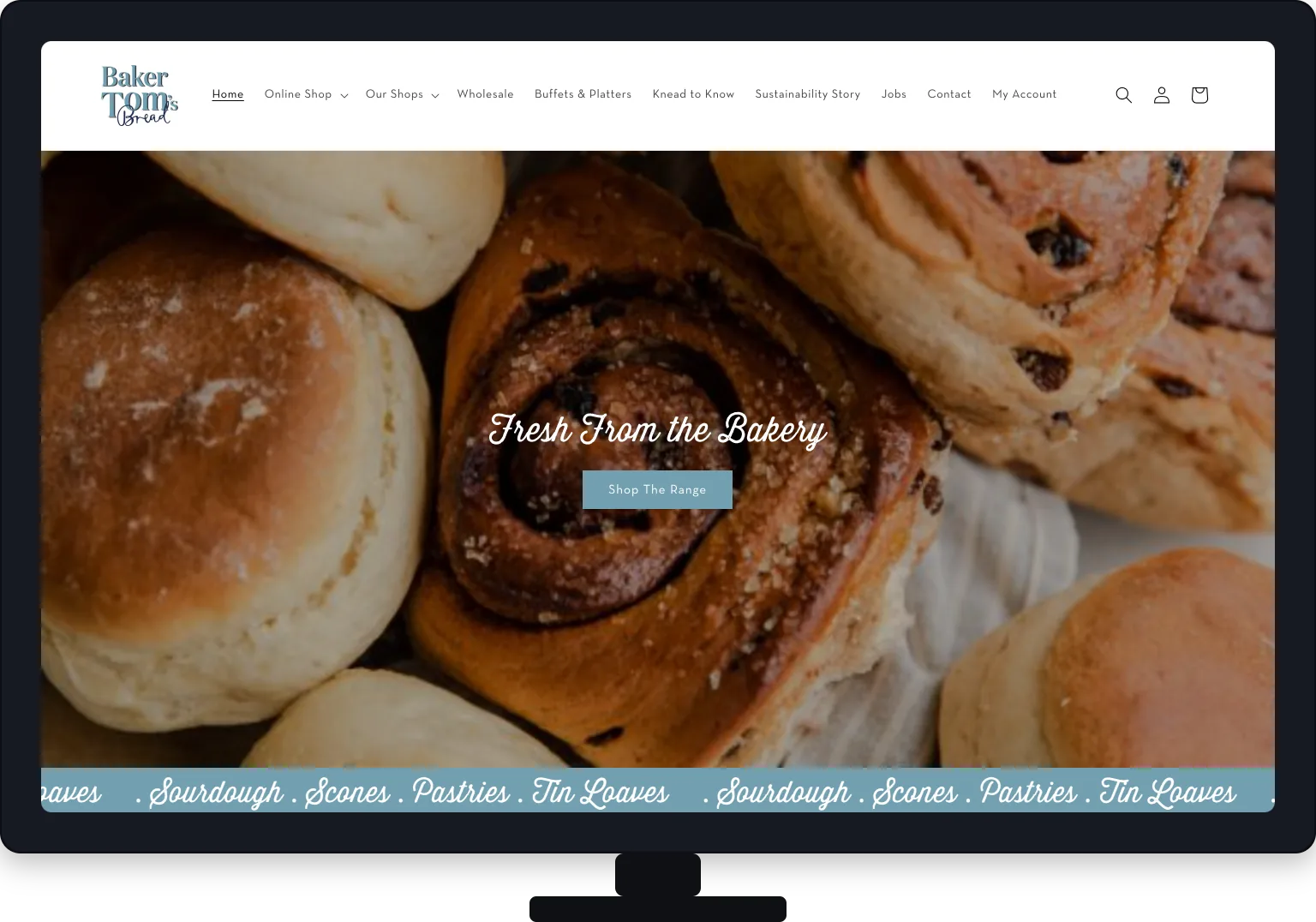
- Baker Tom
- Artisan bakery / e-commerce
- SHOPIFY
- Shopify, Liquid, Shopify Flow, Casa Subscriptions, Vify Order Printer
- 2026
- Shopify & e-commerce
The brief
A Cornwall-based artisan bakery running a Shopify storefront with an active subscription programme. The client came to Devonic Web with a snagging list covering order tagging, subscription tracking, invoicing, and a third-party subscription app that had become a blocker on their growth plan.
What we did
- Rebuilt order tagging logic so fulfilment tags follow the shipping address, not the cart contents.
- Fixed subscription order display so recurring orders show the current cycle date, not the original sign-up date.
- Assessed Shopify-native subscription apps and presented a clean migration path off the blocked Casa upgrade.
- Surfaced customer-selected delivery dates on invoices via the existing Vify Order Printer template.
- Updated the Vify template directly so the client kept their invoicing app instead of switching.
How we built it
Each item was scoped against the live store before anything changed. Tagging logic was rebuilt around shipping-address rules and regression-tested across historical orders, including gift orders and split shipments. Subscription date display was fixed at the template level so the current cycle date renders while the original start date is retained in order notes for support context. The planned delivery date was already being stored as a line-item property, mapping it through to the Vify template surfaced it on every invoice without an app change.
The client arrived with a five-point snagging list covering issues that had built up across order management, subscriptions, and invoicing. Some were affecting day-to-day fulfilment, others were blocking the wider subscription roadmap. The brief was practical: fix each item without forcing a migration off the apps the team was used to.
Order tagging logic
The existing tagging rules were assigning fulfilment tags based on cart contents alone, which meant customers outside Cornwall were picking up tags like "Local Delivery" or "Pick Up In Store" and the warehouse team was working off a misleading picture. We audited the rules and rebuilt the logic so tags are assigned from the shipping address. Orders shipping outside the Cornwall postcode range no longer pick up the local-fulfilment tags, and the warehouse view now reflects the actual route. We regression-tested against a backlog of historical orders to confirm the rule held across edge cases like gift orders and split shipments.
Subscription order date
The original order date was being inherited at the template level rather than being replaced with the current cycle date. A customer who first subscribed on the 2nd of August would still see "2nd August" on their December order, confusing for the customer and the support team. We adjusted the email and order display logic so recurring subscription orders show the date of the current instance. The original subscription start date is still retained in the order notes for reference, so the bakery team can see at a glance how long a customer has been subscribed.
Subscription app migration assessment
The client was locked out of upgrading their Casa Subscriptions plan due to an account email mismatch error, and with Casa effectively a dead end they wanted to move off the platform. We ran a comparison of Shopify-native subscription apps that could take over without breaking existing subscribers, assessing migration path, billing continuity, churn risk, and integration with the existing checkout. The output was a shortlist with a recommended replacement that supported the features they had outgrown on Casa.
Planned delivery date on invoices
Customer-selected delivery dates at checkout, for example, a 14th May delivery on an order placed a week earlier, were being stored as a line-item property but not surfaced anywhere on the invoice. The bakery team had no visible cue of when each order was expected to ship. We mapped the delivery date attribute through to the Vify Order Printer template so it now prints clearly on every invoice, including for orders placed days in advance. That single change closed both the "invoice doesn't show delivery date" item and the "we want to keep using Vify" item in the snagging list.
Vify Order Printer template update
Rather than ask the client to upgrade their Vify plan or migrate to a different invoicing app, we updated the template directly. The template now pulls in the planned delivery date alongside the order date, making it immediately visible to the bakery and packing team without any additional clicks.
What changed
All five items on the snagging list were closed off without the client having to migrate platforms, change invoicing apps, or absorb downtime on the live subscription programme. Order tagging now reflects the genuine fulfilment route, subscription orders display the correct cycle date, planned delivery dates print on every invoice, and the client has a clear path off Casa onto a subscription app that supports their growth plans. The bakery team has reported fewer fulfilment errors on the warehouse floor and a noticeable drop in support tickets relating to subscription order dates.
The result
All five snagging items were closed without a platform migration, an invoicing app switch, or downtime on the live subscription programme. Fulfilment errors on the warehouse floor dropped, and subscription-date support tickets, previously a recurring point of customer confusion, noticeably reduced.
Fewer
Tech stack
- Shopify
- Liquid
- Shopify Flow
- Casa Subscriptions
- Vify Order Printer
07, START A PROJECT
Want work like this?
Tell us what you're building. We reply within 4 hours during UK business hours.