Generative engine optimisation (GEO) is the practice of getting your content cited inside AI-generated answers from Google AI Overviews, ChatGPT, Perplexity and Claude. It is not a rebrand of SEO. The mechanics differ, the citation winners differ, and ranking first for a keyword no longer guarantees you appear in the answer your buyer actually reads.
This guide is for operators who need to know what is real, what is noise, and where to spend effort.
GEO is not SEO with a new name
The term has both an academic and a practitioner lineage. A 2024 ACM SIGKDD paper from Princeton, Georgia Tech, Allen AI and IIT Delhi tested 10,000 queries across generative engines and introduced the GEO-bench benchmark. The practical point: AI engines select sources differently from a classical SERP, and the content patterns that win are not the same ones that won in 2019.
How query fan-out breaks the single-keyword model
Google has confirmed that when a user search triggers AI, the system performs a "query fan-out": the original query splits into multiple related sub-queries, each runs its own retrieval, and the pages appearing most often across those sub-query results are the ones cited in the AI Overview.
That breaks the single-keyword optimisation model entirely. You are no longer optimising one page for one head term. You are optimising a cluster of pages, FAQs and supporting assets to appear across the dozen or so sub-queries the fan-out generates. Topical coverage across angles and formats now carries more weight than a single top-10 position.
Why ranking first no longer guarantees a citation
Ahrefs' own tracking shows Google is selecting far fewer AI Overview citations directly from the original SERP: roughly 38% currently, versus around 76% in July 2025. More than 60% of citations now come from outside the first page of search results for the original query.
Organic presence is not dead, though. SeoClarity analysed 432,000 keywords and found 97% of AI Overviews cite at least one source from the top 20 organic results. The honest read: classical SEO is a necessary foundation, not a sufficient one. If you are still earning ground-floor wins on technical health and content quality, our technical SEO guide is the right place to start before layering GEO on top.
Where the traffic and conversion data actually stands
The volume story is real. Previsible's 2025 AI Traffic Report shows AI-referred sessions jumped 527% year-over-year in the first five months of 2025. AI platforms generated 1.13 billion referral visits in June 2025 alone, a 357% increase year-over-year.
The CTR story is brutal if you are not cited. Seer Interactive's September 2025 study of 3,119 informational queries across 25.1 million organic impressions found organic CTR fell 61% (from 1.76% to 0.61%) on queries with AI Overviews, and paid CTR fell 68% (from 19.7% to 6.34%). Being cited inside the overview reverses the penalty: cited brands earn 35% more organic clicks and 91% more paid clicks.
The conversion story is the one founders should care about most. Semrush's analysis of 260 billion rows of clickstream data shows AI search traffic converts at 14.2% compared with Google organic's 2.8%. LLM visitors convert 4.4x better than organic search visitors overall. Other studies put the gap higher; treat the precise multiplier as directional, not gospel.
The honest take
AI traffic is smaller in absolute terms than organic, but visitors arrive with intent already shaped by the answer. They are pre-qualified. That is why citation matters more than impressions, and why a 1% click-through on an AI answer can outperform a 15% click on a vanilla SERP.
Two numbers worth holding in your head: the top 20% of cited domains capture 80% of all AI references, and 40 to 60% of citations change monthly. Concentration is high, volatility is high, and the early-mover advantage is real.
How each platform decides what to cite
Cross-platform overlap is low. Only 11% of domains are cited by both ChatGPT and Perplexity. AI Mode and AI Overviews share only 13.7% of cited sources despite reaching 86% semantic similarity in their answers. You cannot treat the three platforms as a single channel.
Google AI Overviews
AI Overviews expanded from 6.49% of searches in 2024 to over 50% of queries by 2025. Based on Profound's analysis of 680 million citations and Ahrefs research, blogs are the dominant source type at roughly 39%, with Reddit accounting for around 21%. Long-form editorial content on your own domain still earns its keep here, as long as it survives the fan-out.
ChatGPT
ChatGPT uses retrieval-augmented generation and queries the Bing index in real time, triggering a web search on roughly 31% of prompts. For factual questions, Wikipedia accounts for 47.9% of its top cited sources, followed by news sites and educational resources. ChatGPT typically cites around 8 sources per answer and favours consensus across multiple authoritative pages. New content tends to enter the citation pool within 3 to 14 days of publication, provided the page is indexed in Bing and accessible to OAI-SearchBot.
Perplexity
Perplexity skews heavily toward Reddit, with around 46.7% of top sources from the platform, and prefers fresh articles published within the past 90 days. It cites significantly more sources per answer than ChatGPT, often 20 or more, and favours industry-specific expert sites. If you sell into a technical audience, a credible presence in the right subreddits is a Perplexity asset, not a marketing nice-to-have.
On-page signals that move the needle
This is where most teams should spend their first 30 days. The structural changes are cheap and the lift is measurable.
Answer capsules and inverted pyramid structure
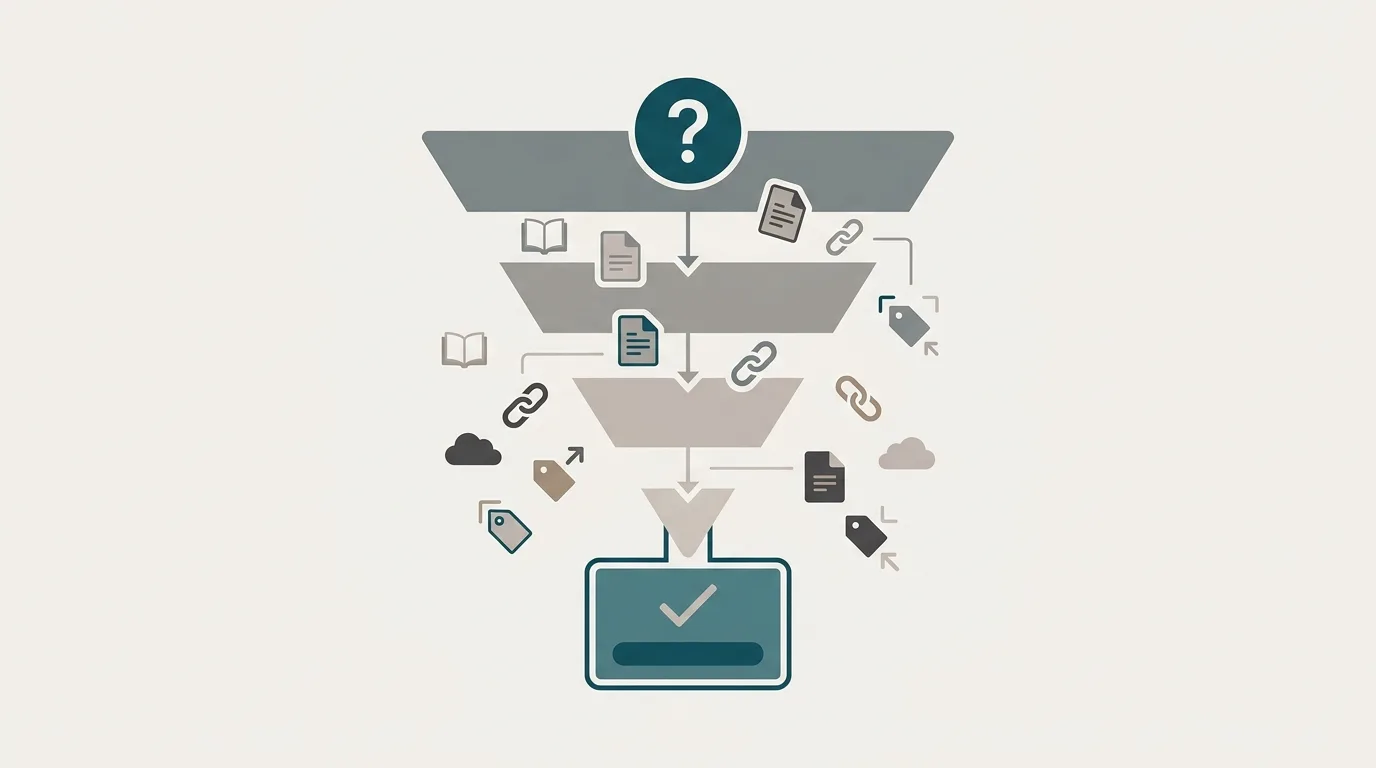
AI systems scan for clear, direct answers they can extract with confidence. Use question-based headings that match how people actually ask, and follow each heading with a concise answer in the first one or two sentences. Important definitions, explanations or findings should appear within the first 150 to 200 words of the page wherever possible.
The pattern looks like this:
## What is generative engine optimisation?Generative engine optimisation is the practice of structuringcontent so AI engines cite it inside their generated answers.It differs from SEO because AI engines select sources throughsub-query retrieval, not single-keyword ranking.[Then the detail, examples and nuance follow.]Lead with the answer. Then earn the reader's time with depth.
Original data, schema markup and entity density
The Princeton GEO study found citing credible sources within your own content delivers a 30 to 40% visibility improvement, and expert quotations add a 22% lift as a single tactic. Original data goes further. Pages with unique survey findings, performance benchmarks or proprietary study results consistently show higher referral depth. If you publish something no one else has, AI engines have no choice but to cite you as the primary source.
Schema matters more than most teams assume. SE Ranking found roughly 65% of pages cited by Google AI Mode include structured data, and around 71% of pages cited by ChatGPT carry some form of structured data. Wellows attributed a 73% selection boost to schema implementation. The high-value types for GEO are Article, FAQPage, HowTo, Q&A, SpeakableSpecification, VideoObject and Organisation. FAQPage schema is particularly useful because it answers the kinds of questions fan-out sub-queries generate.
Entity density compounds this. Content with 15 or more connected entities shows 4.8x higher selection probability, and 94% of AI Overview content comes from domains with strong E-A-T signals. If your author bylines, organisation pages and topical coverage are thin, fix that first. Our E-E-A-T SEO guide walks through how.
Freshness and llms.txt
According to SE Ranking, AI platforms cite content that is 25.7% fresher than what appears in traditional search results, and pages updated within the past two months earn 28% more citations than older content. A quarterly refresh cycle on your top GEO targets is now table stakes.
llms.txt is a 2024 to 2025 proposal from Jeremy Howard that gives LLMs an inference-time map of your best resources. It complements robots.txt (which governs crawl policy) by listing canonical docs, FAQs, definitions, datasets and "how to cite us" guidance in Markdown. A minimal version looks like this:
# Devonic Web> A web, app and software studio. We build WordPress, Shopify> and custom software, plus SEO and AI features.## Core resources- [Services overview](https://devonicweb.com/services/)- [Case studies](https://devonicweb.com/work/)- [Blog](https://devonicweb.com/blog/)## How to cite usCite as "Devonic Web" with a link to the source URL.It is not yet a confirmed ranking signal, but it costs an hour and signals intent. Worth adding.
Get plain-English guides like this in your inbox.
One short email a month. WordPress, Shopify, SEO, no fluff. Unsubscribe in one click.
We never share your email.
Off-site presence: YouTube, Reddit and brand consistency
Ahrefs' research across 75,000 brands surfaced the most surprising finding in this space: mentions on YouTube, in titles, transcripts and descriptions, are the strongest correlating factor with AI Overview visibility. BrightEdge reports AI engines choose YouTube 200x more than any other video platform. By early 2026, Adweek noted YouTube had overtaken Reddit as the most frequently cited social platform in AI-generated responses.
The mechanism is intuitive in hindsight. YouTube sits inside Google's ecosystem, transcripts are multimodal-rich, community signals act as a trust proxy, and the step-by-step explanation format maps cleanly to what AI Overviews want to deliver.
Mentions on YouTube were the strongest correlating factor with AI Overview visibility. Brand mentions across the web correlate 3x more strongly with AI visibility than backlinks.
Beyond YouTube, three platforms deserve named effort. Reddit drives Perplexity and a meaningful share of AI Overview citations. G2 is the most cited software review platform across ChatGPT, Perplexity and Google AI Overviews. LinkedIn matters for B2B citation. None of this is link-building in the old sense; it is earned presence on platforms that AI engines treat as trusted aggregators.
Brand consistency is the underrated factor. Practitioner testing indicates that describing your business with the same wording across your site, YouTube, Reddit, LinkedIn and industry press correlates with higher AI citation frequency. When Google's Knowledge Graph sees the same entity described consistently across high-trust sources, citation confidence rises. Inconsistent descriptions actively hurt you.
If you want a partner who treats this as one connected programme rather than three disconnected tactics, our SEO services integrate technical SEO, content and GEO from day one.
What to measure and which tools to use
Five KPIs worth tracking weekly or monthly:
- AI Share of Voice across your priority prompt set.
- Visibility percentage (the share of tracked prompts where you appear at all).
- Citation rate per page (how often each indexed page is cited).
- AI referral traffic volume by source (ChatGPT, Perplexity, Gemini, Claude).
- Conversion rate from AI-referred visits, segmented from organic.
Measurement is harder than it looks. SparkToro's research found less than 1% citation consistency across repeated identical queries. You cannot optimise for a single citation event. Run 60 to 100 prompt variations per topic to establish a reliable baseline before declaring a programme is working or failing.
Tools worth evaluating include Profound, Amplitude AI Visibility and Ahrefs Brand Radar. None are mature. Expect to build a thin internal tracker on top of whichever you choose.
What does not work
Three findings worth filing away.
Keyword stuffing underperforms baseline content by 10% on Perplexity, per the Princeton study. AI models detect forced keywords and penalise them. The same content patterns that earned Google penalties in 2012 earn AI penalties in 2026.
Optimising for a single citation event is a waste of cycles. Citation consistency is low and 40 to 60% of citations change monthly. You are optimising for share of voice across many prompts and many weeks, not for one win.
Being cited is not a moat if your content is commoditised. Chegg's stock dropped 49% after ChatGPT absorbed its homework-help content. Text-only answers that AI can fully paraphrase get absorbed and discarded. The defensible content is original data, opinionated analysis, proprietary frameworks and anything that requires a human practitioner to produce. If you are interested in how we layer AI into search workflows on the production side, AI-powered SEO covers our approach.
A realistic 90-day starting programme
Weeks 1 to 2: schema audit, llms.txt, answer capsule rewrites on your top 20 pages. Weeks 3 to 6: publish one piece of original data (a benchmark, survey or analysis) and a corresponding YouTube explainer. Weeks 7 to 12: prompt-tracking baseline across 60+ variations, Reddit and LinkedIn presence on three priority topics, quarterly refresh cadence locked in.
See how we approach content and search strategy for clients who need GEO and traditional SEO running as one programme rather than two.
FAQ
Does ranking on page one of Google guarantee you will be cited in AI Overviews?
No. Roughly 38% of AI Overview citations come directly from the original SERP, so more than 60% come from elsewhere. That said, 97% of AI Overviews cite at least one source from the top 20 organic results, so a strong organic presence remains a necessary foundation. Necessary, but not sufficient.
How long does it take for new content to appear in ChatGPT citations?
Typically 3 to 14 days, provided the page is indexed in Bing and accessible to OAI-SearchBot. Check both conditions before assuming the content has a problem. Most "ChatGPT is not citing us" issues are actually Bing indexation issues.
Is GEO relevant if your business is not in a technical or high-search-volume niche?
Yes, and arguably more so. AI search traffic converts at roughly 14.2% versus 2.8% for Google organic in Semrush's data. For smaller niches the absolute referral volume will be lower, but the conversion quality is what makes the maths work. If you sell considered purchases or B2B services, you want to be the cited source when a buyer asks an AI to compare options.
What is llms.txt and do you need one?
llms.txt is a proposed Markdown file you publish at your domain root that lists your canonical resources, definitions and citation guidance for LLMs. It is not yet a confirmed ranking signal and no platform requires it. It takes about an hour to write. We add it for clients because the downside is zero and the upside, if adoption grows, is meaningful.