Why flows outperform campaigns by a wide margin
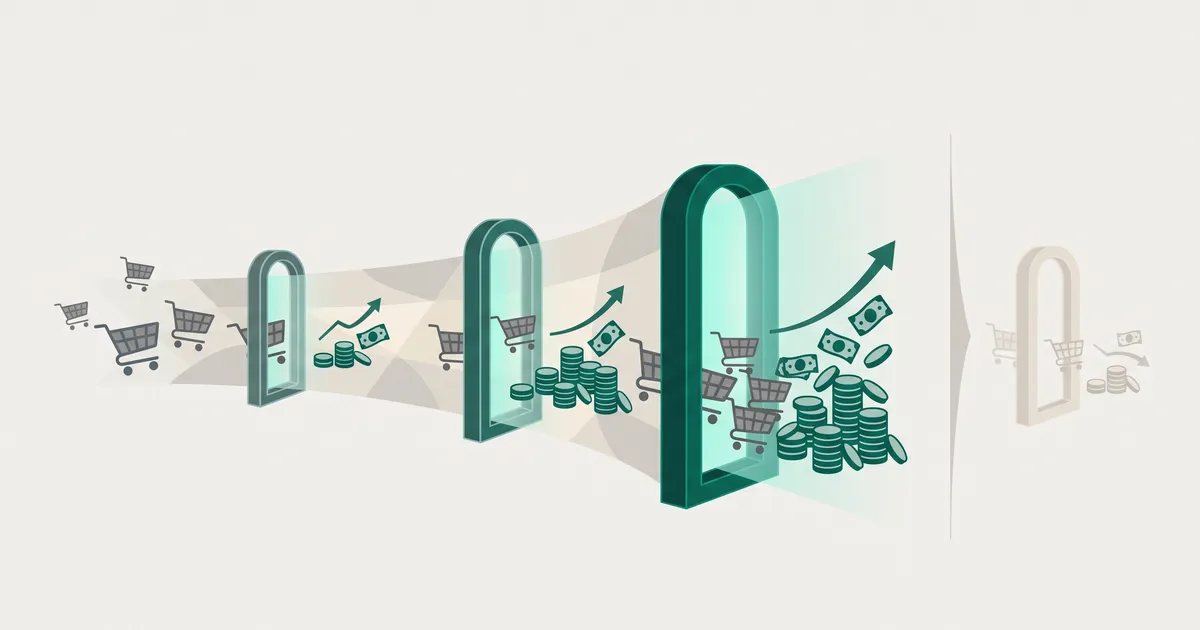
Fix your flows before you touch anything else in Klaviyo this quarter. Klaviyo's own data shows automated flows generate around 41% of email revenue from just 5.3% of sends, with revenue per recipient roughly 18 times higher than one-off campaigns. That is not a marginal difference. It is the entire reason mature ecommerce brands quietly print money from email while newer brands blast weekly newsletters and wonder why the channel underperforms.
Flows work because they trigger on intent. A shopper who abandoned a checkout ten minutes ago is a fundamentally different person to a subscriber who joined your list six weeks ago and hasn't opened since. Campaigns treat them identically. Flows do not. Litmus's 2025 to 2026 State of Email research puts email ROI between $36 and $42 per dollar spent, and almost all of that comes from behavioural automations rather than promotional blasts.
The uncomfortable part: most brands build flows once, ship them, and never look at them again. Well-run flows should generate 30 to 50% of your Klaviyo revenue. If yours don't, the problem is almost never that email is dead. It is that the machinery behind the emails hasn't been tuned since launch.
The build order that compounds revenue fastest
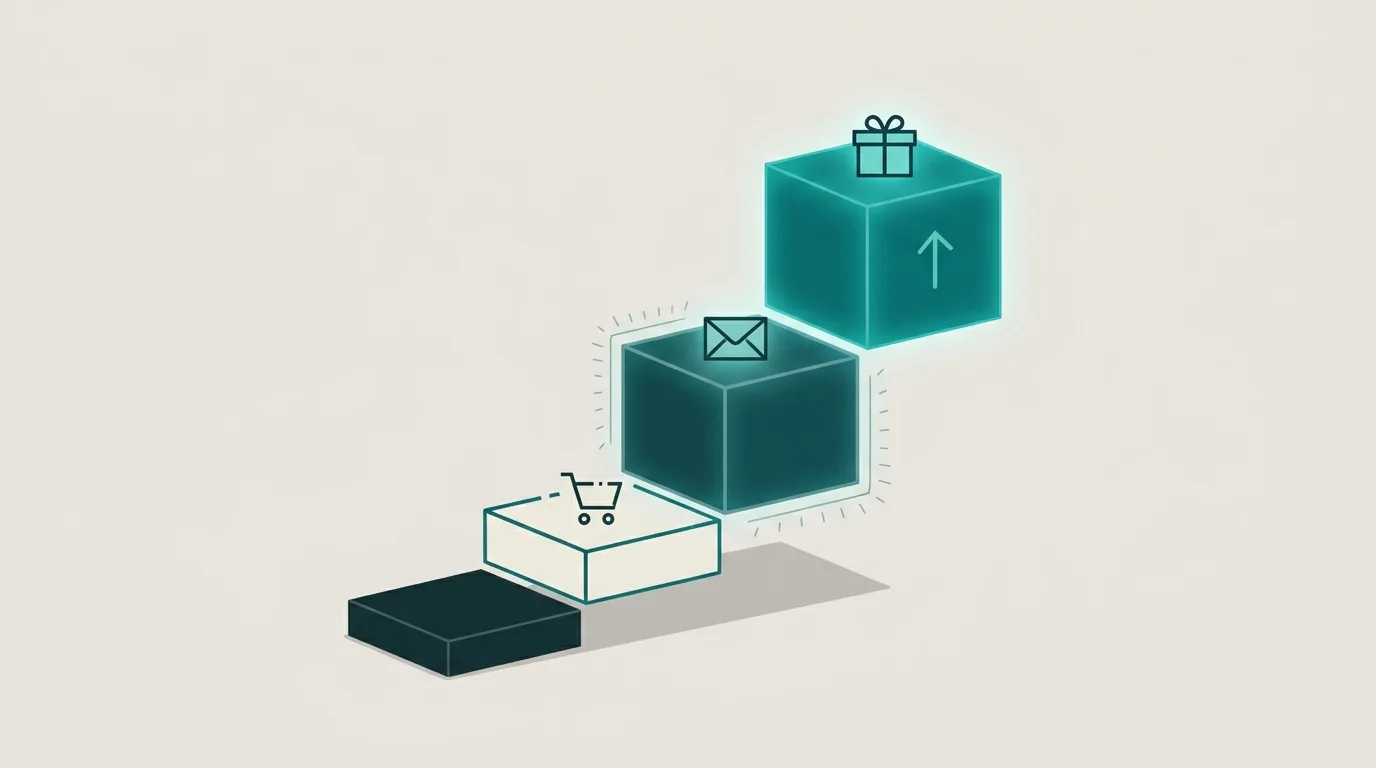
There are around eight core flows every store should eventually run, but they are not equally valuable and the order you build them in decides how fast revenue compounds. Chasing coverage, turning on every default template at once, is a common mistake. You end up with eight mediocre flows instead of two great ones.
The order we recommend, and the order we use when scoping work under our digital marketing services, is roughly this: abandoned checkout, abandoned cart, welcome, post-purchase, browse abandonment, win-back. Sunset and back-in-stock come later.
Abandoned checkout first, then abandoned cart
These are two separate triggers, not the same flow with different names. "Checkout Started" fires when a shopper reaches the checkout page. "Added to Cart" fires earlier in the funnel. Abandoned checkout has the tightest performance spread of any Klaviyo flow, meaning even a mediocre implementation converts. It is the highest-intent audience you will ever email. Turn it on, time the first send within an hour or two, and resist the urge to over-design it.
Abandoned cart trails abandoned checkout slightly on conversion rate but often produces higher revenue per recipient because it catches larger baskets. Build it second, not first. The checkout flow is easier to get right and the incremental revenue arrives faster.
Browse abandonment: a volume play, not a per-recipient play
Browse abandonment fires when someone views a product but doesn't add it to their cart. Klaviyo's aggregate data shows browse flows around 38.87% open rate and 4.91% click rate: healthy numbers, but with much lower revenue per recipient than cart or checkout flows because intent is weaker.
Treat browse as a volume play. It works because it fires often, not because each send is worth much. One caveat that catches brands out: browse abandonment only works when your list is engaged. Sending browse triggers to a stale list accelerates unsubscribes and damages deliverability faster than it drives revenue. If your engagement rates are already low, fix that before you turn browse on.
Post-purchase and win-back: the flows most brands never finish
Post-purchase is the most underbuilt flow in ecommerce. Most brands stop at the Shopify order confirmation and call it done. That leaves the highest-affinity audience you have, people who literally just paid you, with no relationship, no education, no cross-sell, and no reason to come back.
Win-back is the other one nobody finishes. Lapsed customers have already proven they will pay. Klaviyo can trigger the flow on predictive fields like expected next order date, so you catch buyers as they slip into inactivity. Be honest about the ceiling, though. Win-back has the lowest engagement of any flow by definition, because you are messaging people who have already disengaged. It is worth doing, but don't expect abandoned-cart-style revenue per recipient.
The single-email trap: what a three-email sequence actually does
The most common mistake in an abandoned cart flow is sending one email and stopping. Klaviyo's own analysis compared three-email sequences to single-email flows and found the three-email version generated $24.9 million in revenue against $3.8 million for single emails. That is a 6.5x gap on the exact same trigger.
If you change one thing this week
Add emails two and three to your abandoned cart flow. If you already have three, review the timing and the incentive logic. This single change is the highest-return edit in most Klaviyo accounts.
What each email should do
Each email in the sequence has a distinct job. If they say the same thing three times, you are just annoying people.
- Email 1 (send 1 to 4 hours after abandonment). A simple reminder. Show the exact items left in cart, one clear CTA back to checkout, no discount. Many of these shoppers were interrupted, not put off, and a nudge is all they need. Klaviyo's guidance is explicit here: do not include other product recommendations in this email, because they distract from the cart.
- Email 2 (roughly 24 hours later). Reinforce value. Address a likely objection: shipping time, returns, sizing, warranty. This is where social proof, reviews, UGC, press, earns its place. Still no discount for most brands, though some categories warrant free shipping here.
- Email 3 (48 to 72 hours after abandonment). Urgency or incentive. This is where you test discount versus free shipping versus a firm deadline versus no incentive at all. It is not a foregone conclusion that a discount wins.
When to introduce a discount (and when not to)
Discounting every abandonment trains your best buyers to abandon on purpose. If your repeat customers learn that leaving a cart triggers 10% off, you have just cut your margin on the buyers who were going to purchase anyway.
Rules of thumb we use:
- Never discount in email one.
- For considered or high-margin purchases (furniture, jewellery, electronics), test urgency and stock scarcity before you test money off.
- For commodity or low-consideration categories, free shipping often outperforms a percentage discount because it feels like removing friction rather than cutting price.
- Always run a no-incentive variant as a control. You will occasionally find it wins on revenue per recipient because it protects average order value.
If you are still building out the fundamentals underneath these flows, the piece on fundamentals of ecommerce marketing covers the acquisition side that feeds them.
The gap between average and top-decile performers
Klaviyo's benchmark report puts average abandoned cart revenue per recipient at $3.65. Top-decile is $28.89. That is nearly eight times, not a factor of two. Category matters (top-decile automotive, hardware, home & garden and electronics brands see revenue per recipient between $52 and $75), but even inside a single category the spread is enormous.
Recovery rate tells a similar story. Most brands recover 3 to 5% of abandoned carts. A single-email flow recovers only 2 to 3%. Top performers recover 10 to 14% by combining multi-step email and SMS with sensible incentive placement.
Elite performers generate $28.89 per recipient, nearly 8x the average. That gap is largely a deliverability story, not a copy story.
Deliverability and list hygiene as the real lever
Most operators optimise the wrong thing. They rewrite subject lines and A/B test button colours. Meanwhile Gmail inbox placement across the industry dropped to 87.2% by Q4 2024, meaning roughly one in eight of your emails does not reach the inbox at all. No subject line saves you if the email isn't landing.
The real levers are unglamorous: authenticated sending (SPF, DKIM, DMARC set to at least quarantine), a warm and consistent sending cadence, and aggressive sunsetting of unengaged profiles. Suppress anyone who hasn't opened in 90 to 120 days. Yes, your list size number goes down. Your revenue does not, because those people were not opening anyway, and their presence was dragging your sender reputation with every send.
Tracking also matters here. If your flow triggers are firing on a subset of actual sessions because of Safari ITP and ad blockers, you are simply not sending emails to people who should be getting them. Sending events through the Klaviyo Events API server-side, rather than relying on client-side JavaScript, bypasses the 7-day ITP cookie cap and ad blockers, and typically lifts identifiable sessions materially. The same principle applies to your analytics stack, and we walk through it in server-side GA4 and fixing conversion tracking.
The 2025 billing change that made a dirty list doubly expensive
In 2025 Klaviyo changed its billing model. You now pay for every active profile in your database, not just contacts you send to. Sitting on 200,000 unengaged profiles used to be a deliverability tax but not a cash cost. Now it is both.
Sunsetting has a double payoff now
Under the 2025 billing model, aggressive sunsetting lowers your Klaviyo invoice as well as protecting deliverability. If you haven't run a suppression sweep since the change, that is a same-week job.
Get plain-English guides like this in your inbox.
One short email a month. WordPress, Shopify, SEO, no fluff. Unsubscribe in one click.
We never share your email.
What to actually measure in Klaviyo
Klaviyo defaults to a 5-day attribution window, which inflates campaign revenue and can misrepresent flow performance in either direction. Do not judge flows by total attributed revenue in the dashboard. Judge them by:
- Revenue per recipient (RPR). The single most useful flow metric. Total attributed revenue divided by the number of unique recipients over a defined window. This normalises for list size and lets you compare flows fairly.
- Recovery rate. Recovered orders divided by eligible abandonments. This tells you whether the flow is actually doing its job, independent of average order value.
- Time to recovery. How long between abandonment and purchase. If your average is creeping up, your later emails are doing the work and you may be able to shorten the sequence.
- 90-day CLV lift. Compare the 90-day customer lifetime value of your messaged cohort against a small holdout cohort that receives no flow emails. This is the only measurement that tells you what the flow is actually adding versus what would have happened anyway. Most brands never do this. The ones that do make better decisions about where to invest optimisation time.
A holdout of 5 to 10% is usually enough to detect a real lift without meaningfully denting revenue. It is worth the discipline.
SMS as a flow layer
If your list is legally opted in for SMS, add one SMS touchpoint between email one and email two of your abandoned cart flow. Klaviyo supports this natively. The lift is consistent enough across accounts that we treat it as a default rather than a test.
Two caveats. First, SMS is a permission-heavy channel: cost per unsubscribe is high in both cash and goodwill, so keep the copy short, useful and clearly branded. Second, do not send SMS at unsociable hours. Klaviyo's quiet hours settings are there for a reason.
If your store is on Shopify Plus or WooCommerce and you are wondering whether the platform is the bottleneck rather than the flows, our comparison of Shopify Plus vs WooCommerce for high-volume stores covers the operational trade-offs.
Good Klaviyo flows are a sequencing problem, a deliverability problem, and a measurement problem, in that order. Get the build order right, ship the three-email cart sequence properly, keep your list clean under the new billing model, and measure revenue per recipient and CLV lift rather than vanity totals. Do that and the channel does the compounding for you.
If you want a second pair of eyes on your flows, or you are rebuilding the store underneath them, see how we approach ecommerce projects.